- About MCS
 MCS ranks among the top independent secondary schools, and in 2024 was awarded Independent School of the Year for our contribution to social mobility.
 - Admissions
Approximately 1 in 10 pupils receive a bursary or scholarship. We are committed to ensuring an MCS education is open to the brightest pupils, no matter their personal circumstances.
- Supporting MCS
In 2024-25, MCS received over £1.2 million in donated funds.
 MCS ranks among the top independent secondary schools, and in 2024 was awarded Independent School of the Year for our contribution to social mobility.
 In 2024-25, MCS received over £1.2 million in donated funds.
- Junior School
“The Junior School is a very busy and happy school and here, a smile goes a long way.”
- Senior School
“His experience at MCS has been extraordinary.” – Senior School parent
- Sixth Form
About a quarter of our Sixth Form pupils take up places at Oxford, Cambridge and Ivy League Universities.

 “His experience at MCS has been extraordinary.” – Senior School parent
- About MCS
MCS ranks among the top independent secondary schools, and in 2024 was awarded Independent School of the Year for our contribution to social mobility.
- Admissions
Approximately 1 in 10 pupils receive a bursary or scholarship. We are committed to ensuring an MCS education is open to the brightest pupils, no matter their personal circumstances.
- Supporting MCS
In 2024-25, MCS received over £1.2 million in donated funds.
- Junior School
“The Junior School is a very busy and happy school and here, a smile goes a long way.”
- Senior School
“His experience at MCS has been extraordinary.” – Senior School parent
- Sixth Form
About a quarter of our Sixth Form pupils take up places at Oxford, Cambridge and Ivy League Universities.
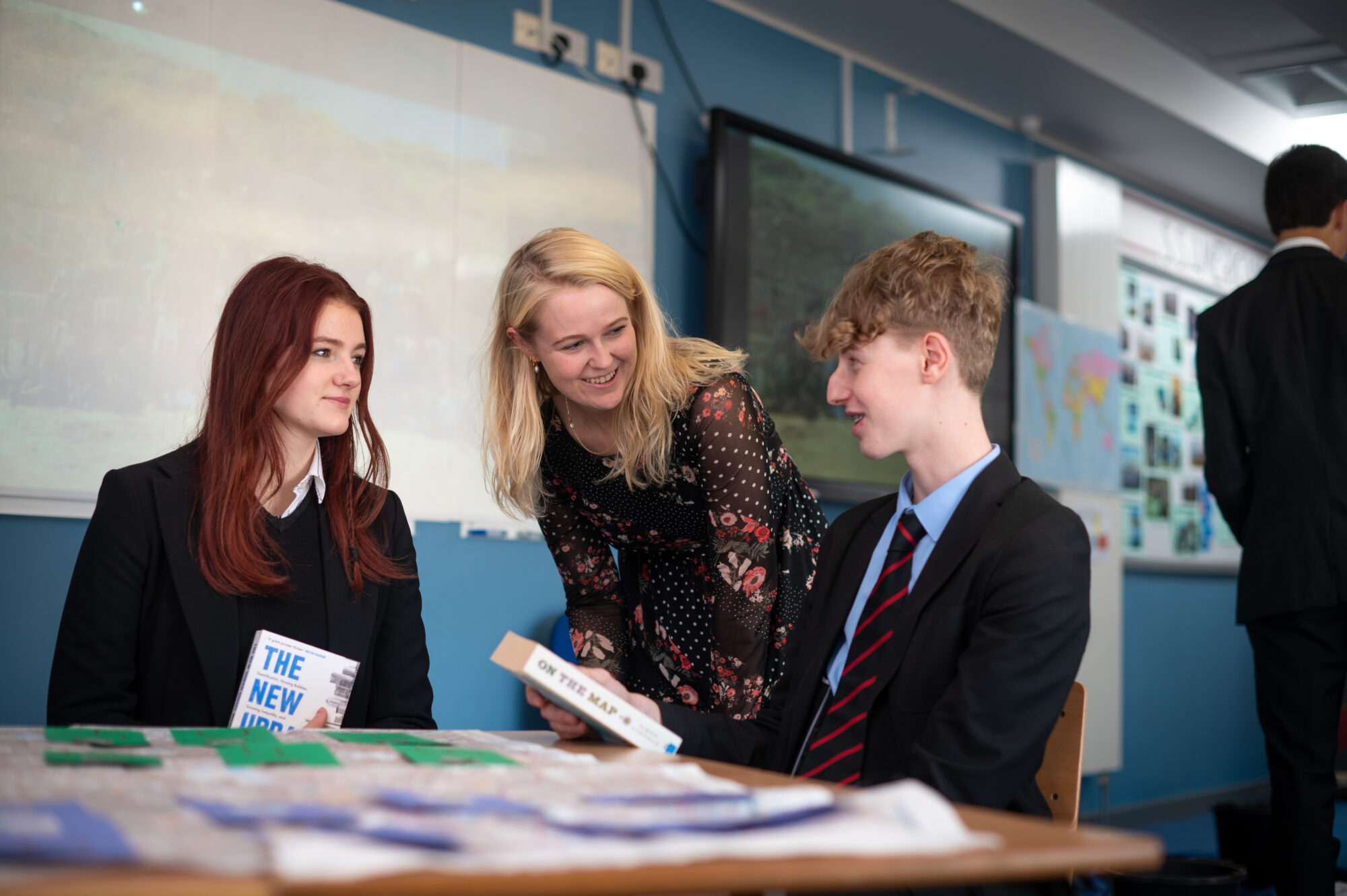
Your time in the Sixth Form will be academically challenging, but extremely rewarding, and an opportunity to study the subjects you most enjoy. Within an environment of like-minded peers, and inspiring teachers, you will be challenged to develop and research your own ideas. You will take part in stimulating lessons – which in many cases will mirror the tutorial style of learning you will experience at university.
All pupils start the Lower Sixth year studying at least four A Levels, alongside their Waynflete Studies Project (our bespoke Extended Project), Community Service Placement and Games sessions.
In the Upper Sixth, pupils continue with between three and five subjects alongside a stimulating Lecture Programme. Whilst universities typically make offers for three A Levels, taking four allows our best students the opportunity to flex their academic potential when applying to the most competitive courses and universities in the UK and abroad.
A Level subjects are typically delivered by two or three teachers, and the timetable is structured across five blocks of eight 40 minute lessons.
"The teachers’ passion for their subjects is infectious."
Sixth Form parent

Independent Learning
Independent working and time management are key skills that need to be developed prior to university level study; our Sixth Form structure supports and promotes the successful development of these skills.
Pupils have a small number of study periods in the Lower Sixth, before a reduction in timetabled commitments and sometimes the dropping of an A Level provides a good deal more time for independent study in the Upper Sixth.
Sixth Formers spend their study periods in the purpose-built common room or in one of our Sixth Form only study suites, choosing between social, quiet or silent study environments.
Support and extensions sessions for all subjects happen at various points throughout the week, but the dedication of our staff and the high quality of teaching relationships see pupils regularly and informally seeking additional help at all times of the working day.
Lecture Programme
Visiting speakers give fortnightly lectures to the Upper Sixth and there is a wealth of other opportunities for academic enrichment in the Sixth Form at MCS. Many pupils choose to lead or attend reading groups and societies, and there are dedicated sessions to help with university preparation. These include sessions to help pupils develop their approach to admissions tests and practice interviews.
Learning Support
Our experienced Learning Support Department offers tailored support to help pupils achieve their full potential – from help to manage a diagnosed medical need, through to more routine interventions and classroom support to manage issues such as focus and attention, study skills or time management. We also offer support to pupils with English as an Additional Language. Underpinning our learning support is close communication between home and school; and within school, between the Learning Support Department, tutors and teachers.
Waynflete Studies
The Waynflete Studies Project is a piece of extended research completed by all pupils in the Lower Sixth. Unique to MCS, it offers pupils an opportunity to research a topic of their choice, often under the guidance of an external tutor from Oxford University.
Highly regarded by universities, the programme provides excellent preparation for undergraduate study and teaches vital skills for producing a research-based, extended piece of work in response to an open-ended question.
At the start of the programme, pupils attend introductory lectures from visiting specialists before opting to work in one of the following faculties:
- Biological Sciences
- History and Politics
- Humanities and Social Sciences
- Languages and Classics
- Mathematics and Computing
- Physical Sciences
Alternatively, they can opt for the Enterprise stream or the Practical Science stream, in which they pursue more practical work under the direction of a business professional or in a lab guided by a university scientist.
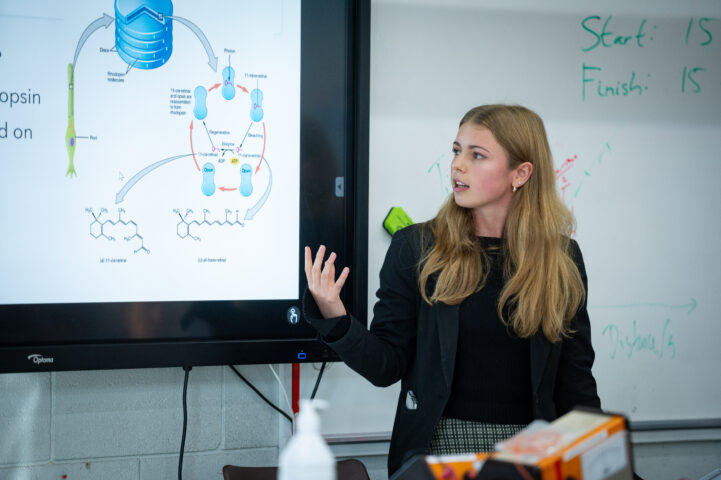
“Once again, your students are bright and engaging. MCS students on this module tackle really challenging tasks, are admirably independent and really converse beyond their years.”
Social Sciences Tutor
At the end of the programme, pupils present their project to an audience of their peers, teachers, parents and guests, before the best ones are selected for prizes and an awards ceremony, which takes place in Magdalen College.