- About MCS
 MCS ranks among the top independent secondary schools, and in 2024 was awarded Independent School of the Year for our contribution to social mobility.
 - Admissions
Approximately 1 in 10 pupils receive a bursary or scholarship. We are committed to ensuring an MCS education is open to the brightest pupils, no matter their personal circumstances.
- Supporting MCS
In 2024-25, MCS received over £1.2 million in donated funds.
 MCS ranks among the top independent secondary schools, and in 2024 was awarded Independent School of the Year for our contribution to social mobility.
 In 2024-25, MCS received over £1.2 million in donated funds.
- Junior School
“The Junior School is a very busy and happy school and here, a smile goes a long way.”
- Senior School
“His experience at MCS has been extraordinary.” – Senior School parent
- Sixth Form
About a quarter of our Sixth Form pupils take up places at Oxford, Cambridge and Ivy League Universities.

 “His experience at MCS has been extraordinary.” – Senior School parent
- About MCS
MCS ranks among the top independent secondary schools, and in 2024 was awarded Independent School of the Year for our contribution to social mobility.
- Admissions
Approximately 1 in 10 pupils receive a bursary or scholarship. We are committed to ensuring an MCS education is open to the brightest pupils, no matter their personal circumstances.
- Supporting MCS
In 2024-25, MCS received over £1.2 million in donated funds.
- Junior School
“The Junior School is a very busy and happy school and here, a smile goes a long way.”
- Senior School
“His experience at MCS has been extraordinary.” – Senior School parent
- Sixth Form
About a quarter of our Sixth Form pupils take up places at Oxford, Cambridge and Ivy League Universities.
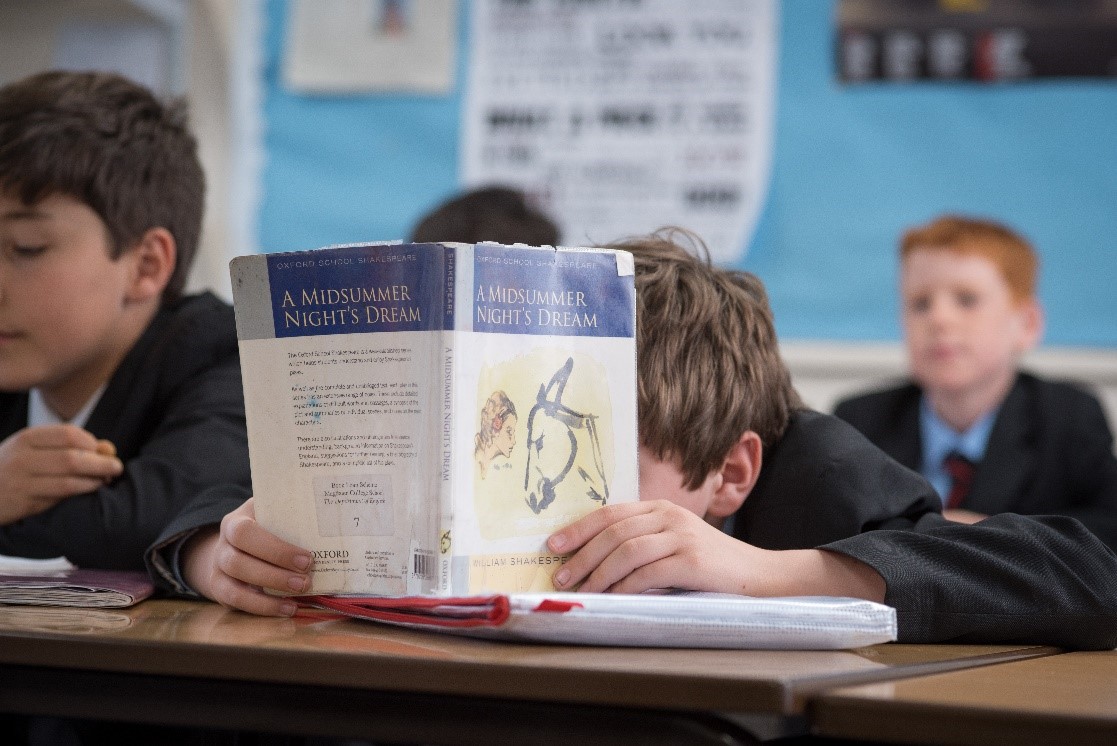
Magdalen College School is unashamedly academic, a community of bright and inquisitive pupils guided by intelligent and inspiring teachers.
Lessons are short – typically 40 minutes – adding to the sense of pace and purpose that pervades academic life here. Pupils and teachers love to challenge and be challenged; lessons fizz with discussion, debate and determination. The quality of these conversations makes the MCS experience distinctive and pupils with potential thrive here.

We are a school that values scholarship and a love of learning for its own sake. Our teachers know how to inspire bright young minds, and our pupils feed off each other’s talents and enthusiasm.
Academic Enrichment
We value scholarship and a love of learning for its own sake. Our teachers know how to inspire bright young minds, and our pupils spark off each other’s talents and enthusiasm. We do not ‘teach to the test’ – we teach far beyond it, allowing pupils and teachers the freedom to pursue academic interests while developing an appreciation of rigour and precision. Perennially impressive exam results follow as a natural outcome.
Core values, attributes and dispositions underpin all that we teach. We explore a different learning disposition – independence, collaboration, motivation, perseverance, and reflection – each half term and the language of dispositions is used throughout the school.
Beyond the classroom we offer a wealth of subject societies, reading groups and debates – often pupil-led – alongside a superb programme of visiting speakers, drawing on our connections within Oxford and beyond.
Academic life in the Lower School
Pupils in the Lower School follow a broad curriculum, with the focus on fostering a love for learning and developing excellent working habits. Lessons are energetic and fun, with classrooms alive with pupils engaging with their work, teachers and peers.
Pupils study Maths, English, Biology, Physical Sciences, History, Geography, Theology, Art, Music, Design Technology, French, Latin, Computing, Drama and Oracy, PE and Games. We do not set by ability, except in Maths. Pupils also have a ‘Lilium’ lesson each week, which covers PSHCE and wider life skills. All pupils also complete a Junior Waynflete Studies Project on twelve-week rotations under the guidance of a supervisor. This is an extended piece of research and writing on a topic of their choosing, and is designed to build pupils’ independence in learning, to foster rigour and creativity of thought, and to cultivate the skills necessary for ongoing success and enjoyment of study at school and beyond.

Academic life in the Middle School
In the Middle School, pupils study subjects in greater depth and begin to make choices about which subjects they wish to study at (I)GCSE. The focus remains on keeping subjects challenging and interesting, and laying the foundations for Sixth Form study.
In the Lower Fourth, pupils study Maths, English, Biology, Chemistry, Physics, History, Geography, Theology, PE and Games. Additionally, pupils choose three subjects (including at least one Modern Foreign Language) from Art, Music, Latin, Ancient Greek, French, German, Mandarin and Spanish. Pupils also have two Lilium lessons each week, covering PSHCE/life skills topics, research and public speaking, a business and enterprise programme, and an introduction to computational thinking and dealing with data.
In Upper Fourth and Fifth Form, pupils study for ten (I)GCSEs. All pupils take Maths(with the top two or three sets also taking Additional Maths), English Language, English Literature, Biology, Chemistry and Physics. Pupils choose a further four subjects (including at least one Modern Foreign Language) from Art, Music, Computer Science, Latin, Ancient Greek, French, German, Mandarin, Spanish, History, Geography, Theology and PE GCSE. Pupils continue to have lessons in Games.
Learning Support
Our experienced Learning Support Department offers tailored support to help pupils achieve their full potential. All pupils are assessed on entry, with support scaled according to need – from help to manage a diagnosed medical need, through to more routine interventions and classroom support to manage issues such as focus and attention, study skills or time management. We also offer support to pupils with English as an Additional Language. Underpinning our learning support is close communication between home and school; and within school, between the Learning Support Department, tutors and teachers.