- About MCS
 MCS ranks among the top independent secondary schools, and in 2024 was awarded Independent School of the Year for our contribution to social mobility.
 - Admissions
Approximately 1 in 10 pupils receive a bursary or scholarship. We are committed to ensuring an MCS education is open to the brightest pupils, no matter their personal circumstances.
- Supporting MCS
In 2024-25, MCS received over £1.2 million in donated funds.
 MCS ranks among the top independent secondary schools, and in 2024 was awarded Independent School of the Year for our contribution to social mobility.
 In 2024-25, MCS received over £1.2 million in donated funds.
- Junior School
“The Junior School is a very busy and happy school and here, a smile goes a long way.”
- Senior School
“His experience at MCS has been extraordinary.” – Senior School parent
- Sixth Form
About a quarter of our Sixth Form pupils take up places at Oxford, Cambridge and Ivy League Universities.
 “His experience at MCS has been extraordinary.” – Senior School parent
- About MCS
MCS ranks among the top independent secondary schools, and in 2024 was awarded Independent School of the Year for our contribution to social mobility.
- Admissions
Approximately 1 in 10 pupils receive a bursary or scholarship. We are committed to ensuring an MCS education is open to the brightest pupils, no matter their personal circumstances.
- Supporting MCS
In 2024-25, MCS received over £1.2 million in donated funds.
- Junior School
“The Junior School is a very busy and happy school and here, a smile goes a long way.”
- Senior School
“His experience at MCS has been extraordinary.” – Senior School parent
- Sixth Form
About a quarter of our Sixth Form pupils take up places at Oxford, Cambridge and Ivy League Universities.
We had a seminar full of pupils gathered for a deep dive into the world of gas, monitors, and life-critical precision. We were pleased to welcome Dr Sara McDouall, a Consultant Anaesthetist from Royal Berkshire Hospital, who offered an insightful look into one of medicine’s most misunderstood yet vital specialties.
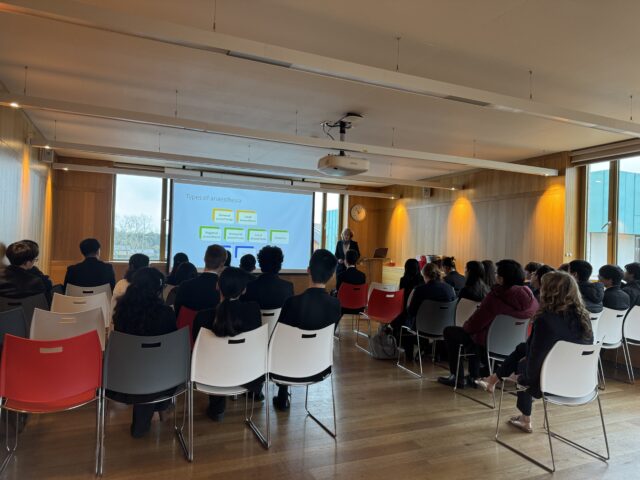
Sara kicked off the session by addressing the common misconception that anaesthetists simply “put people to sleep.” Instead, she described the role as the “pilot of the patient’s life” during their most vulnerable moments. From the high-stakes environment of trauma bays to the steady rhythm of elective surgeries, she walked us through a day in the life, highlighting the blend of pharmacological expertise and composed decision-making. The session covered the core pillars of the field, including general anaesthesia, regional and local techniques like epidurals, and the nuances of sedation.
One of the most captivating segments focused on the future of robotics in surgery. Dr McDouall explained how automation and AI aren’t replacing clinicians, but rather acting as “super-tools.” We discussed how robotic precision allows for minimally invasive surgeries, which in turn changes how anaesthesia is managed to ensure faster recovery times.
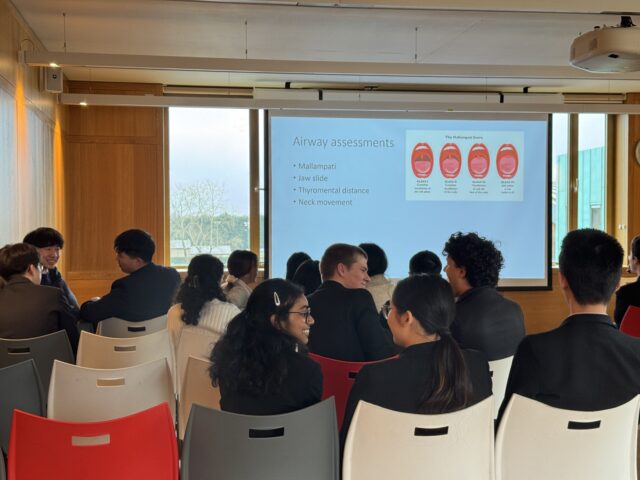
It wasn’t all just listening, however. Pupils got a taste of clinical practice through airway assessments. Using the Mallampati Score, a visual scale used to predict the ease of intubation, pupils practiced evaluating one another to identify potential clinical challenges. This hands-on activity highlighted a vital truth of the profession: an anaesthetist’s primary job isn’t just administering drugs, it’s protecting the patient’s ability to breathe.
The energy stayed high until the very end, concluding with a round of thoughtful questions. Our students peppered Dr McDouall with insightful questions ranging from patients safety to automation and AI on robotics in surgery.