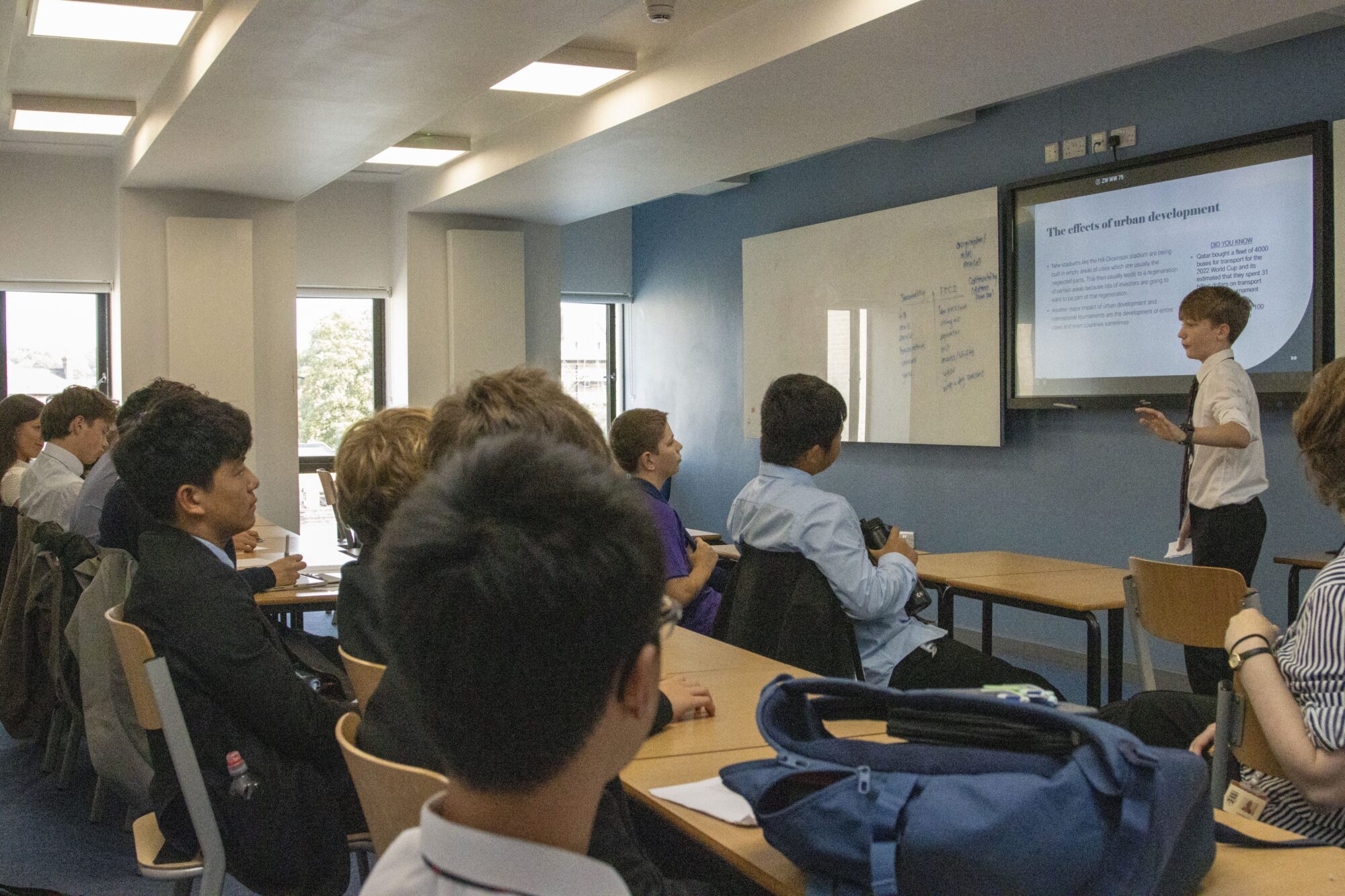
MCS welcomes leading economists to Economics Conference
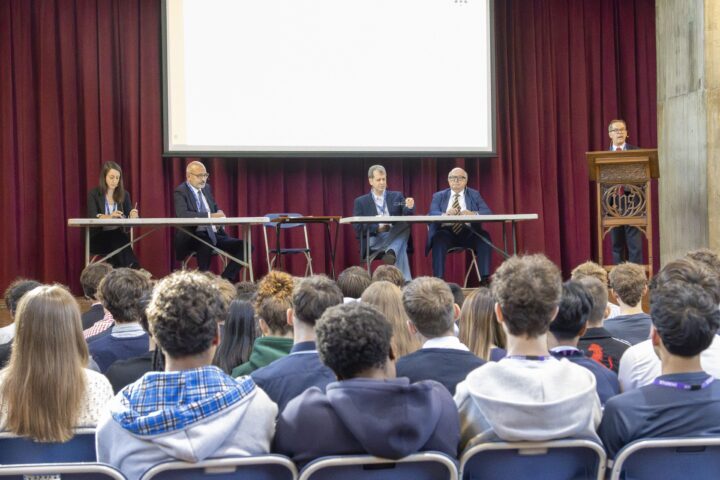
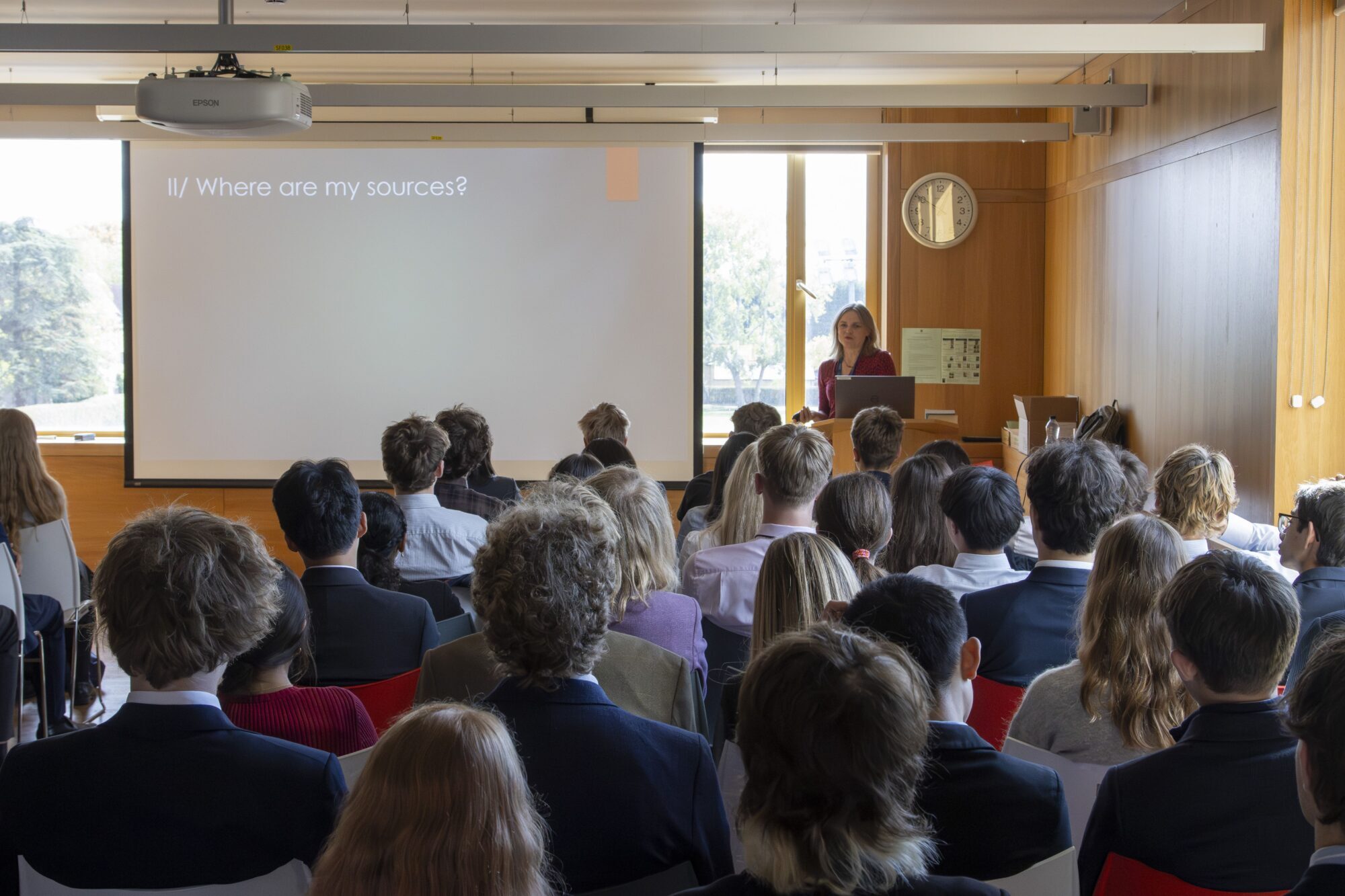
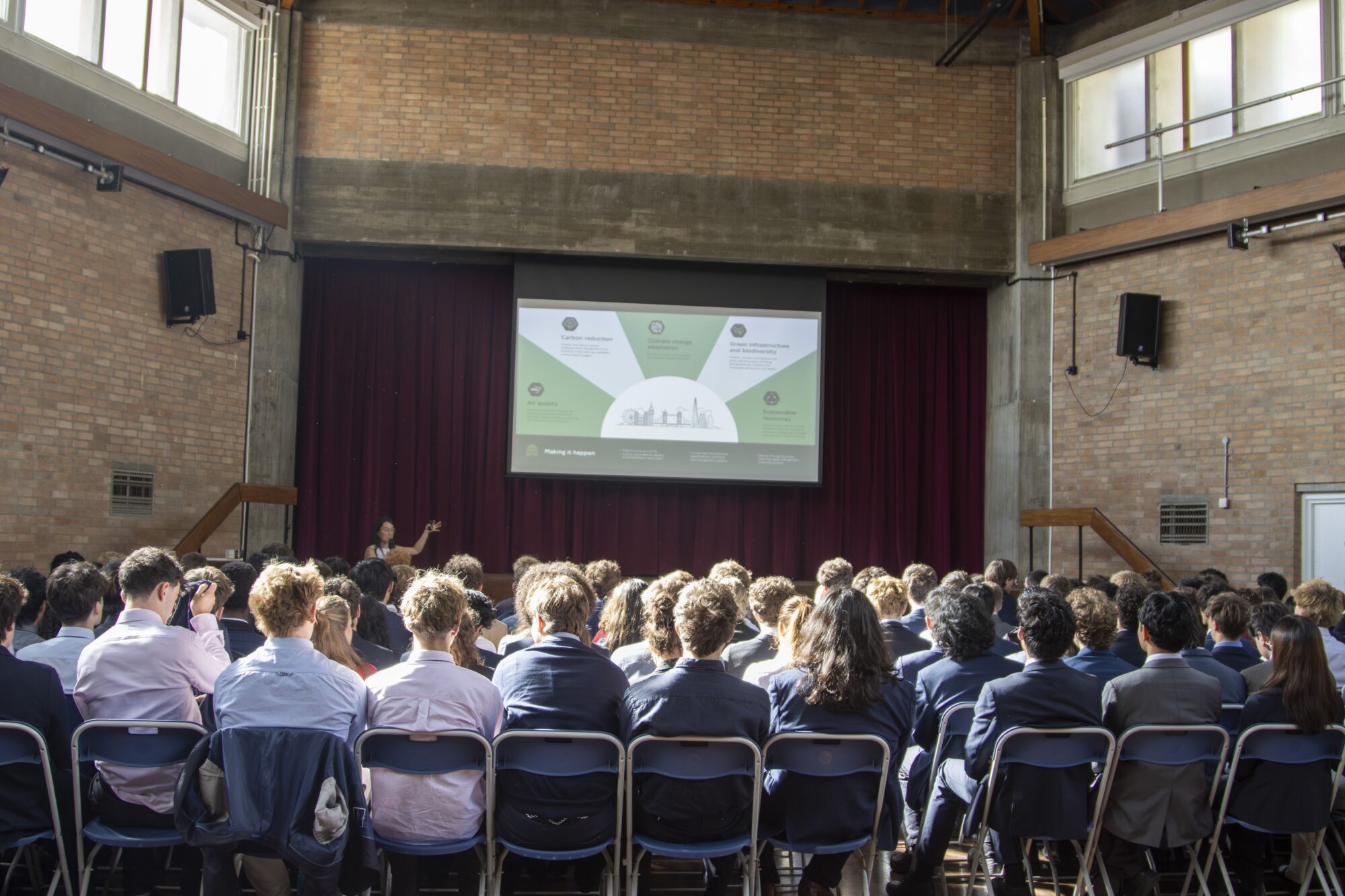
Earlier this week, Big School became a hub of economic debate and intellectual exchange as MCS welcomed leading figures from banking, consultancy, business and research for its inaugural Economics Conference.
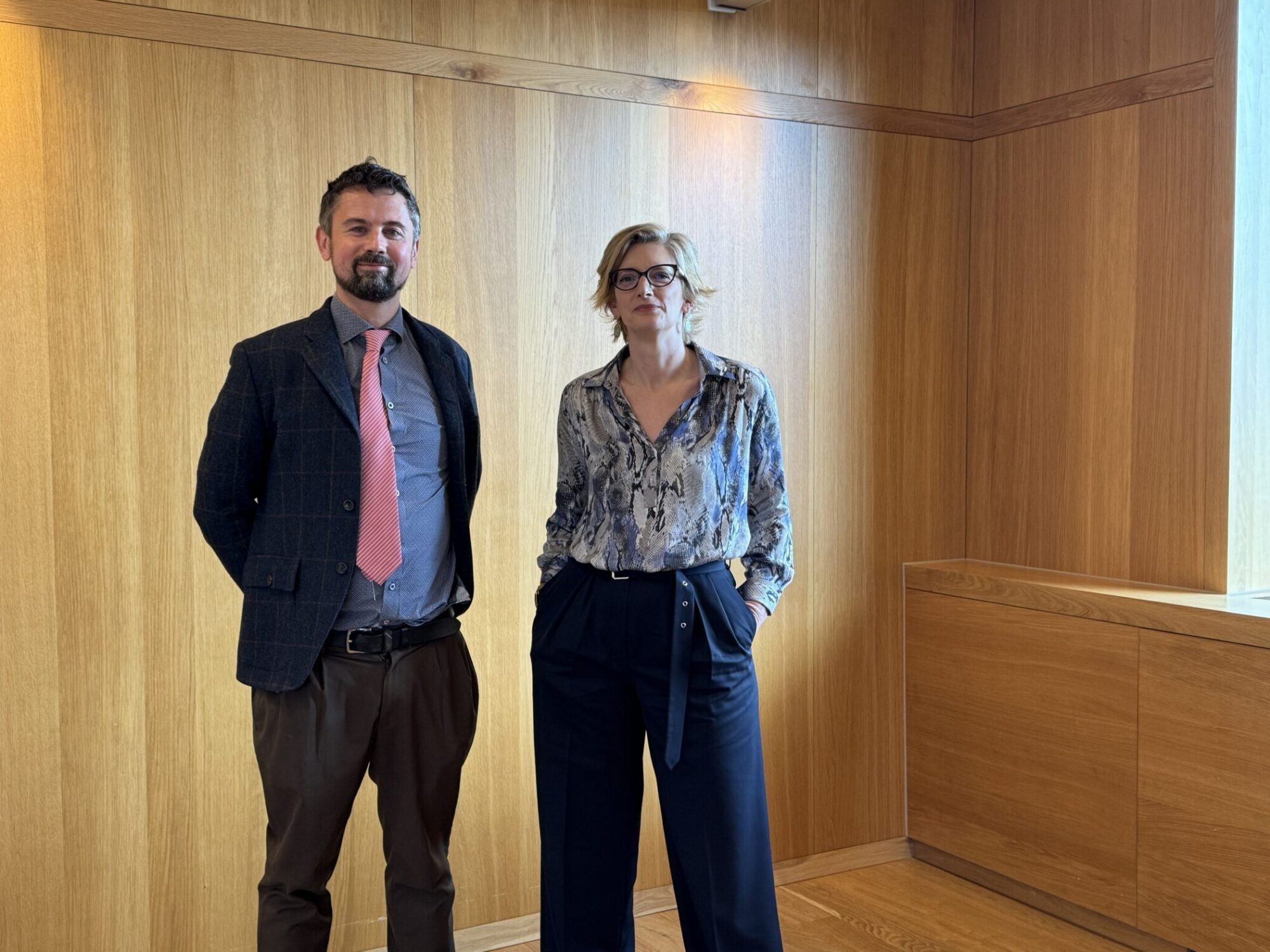
Introduced and chaired by Neil Record (OW 1971), Founder of Record Currency Management, one of the world’s largest independent currency and asset management firms, and former Chairman of the Institute of Economic Affairs, the line-up included:
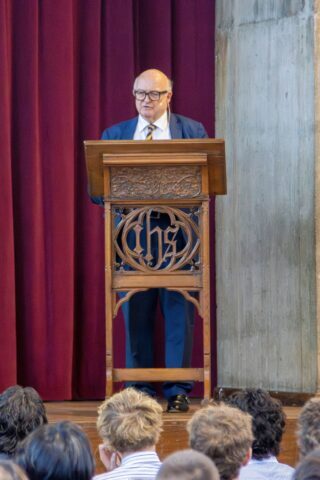
- Roger Bootle, a leading UK economist, founder of Capital Economics and a former adviser to both the UK Government and House of Commons Treasury Committee. An award-winning commentator and bestselling author, Roger’s latest work explores the economic impact of artificial intelligence. Roger argued that the principal problem in the UK economy is supply-side, and that deregulation and welfare reform are key to enabling business investment and encouraging work which will allow for productivity growth.
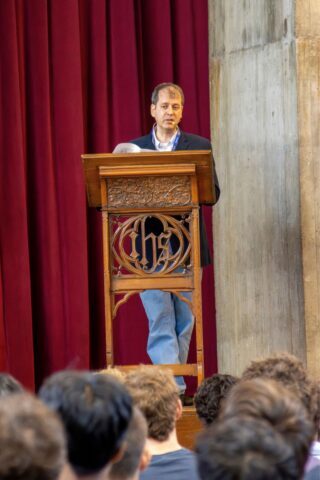
- Chris Kingsley CBE, Co-founder and CTO of Rebellion, one of Europe’s largest independent video game and entertainment companies, known for franchises including Sniper Elite and Zombie Army. Under his leadership, Rebellion has expanded into publishing, film and television, employing hundreds of staff across the UK. Chris spoke from the perspective of his own business and argued that the real question is how we grow our businesses, for which he suggested that reducing taxes, and paperwork and reporting, could go a long way to enable businesses to reinvest.
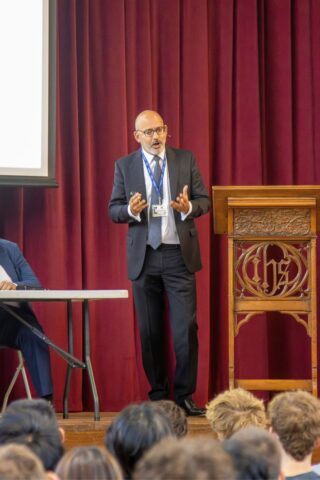
- Krishna Guha, Vice Chairman and Head of Economics at Evercore. Krishna previously helped shape US monetary policy at the New York Federal Reserve and worked as a senior economics journalist at the Financial Times. He is a Cambridge graduate and Fulbright Scholar. Krishna argued for responsible fiscal and monetary policy, combined with supply-side reforms, a closer relationship with Europe and taking advantage of the benefits of AI are key to the future of UK growth.
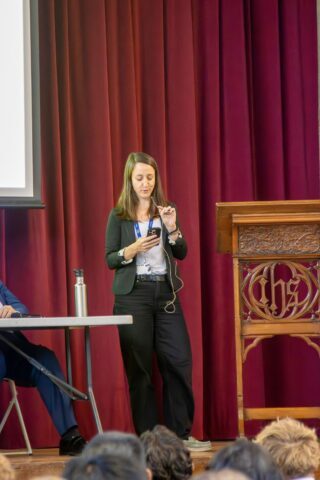
- Sheridan Kates, an ecological economist, Green Party councillor and activist who works with Modern Money Lab UK to promote new approaches to economic policy and public finance. Sheridan is a prominent advocate of degrowth and Modern Monetary Theory. Her talk introduced students to heterodox economic approaches. She argued that neoclassical economics has been disproved and that actually the Government has a duty to support degrowth whilst supporting the Modern Monetary Theory that the government can support infrastructure without having to worry about debt burdens.
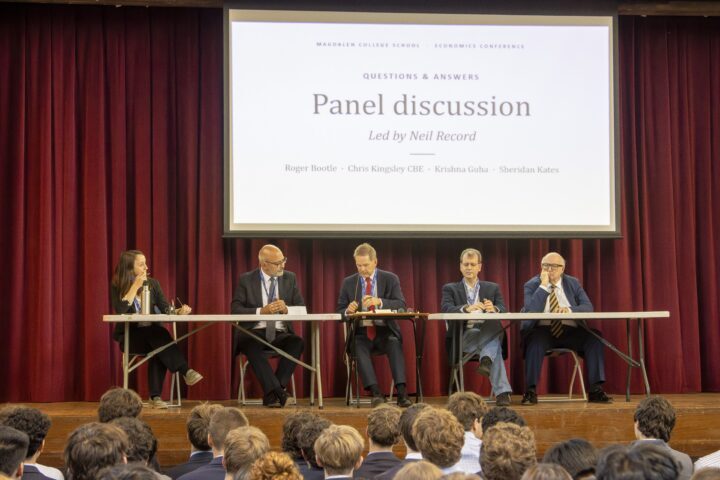
In addition to their talks, the speakers participated in a lively panel discussion, chaired by Neil, of questions submitted by pupils. The audience included around 140 students including from five partner schools, including Larkmead, King Alfred’s Academy, Didcot Sixth Form, Greyfriars School, and Wheatley Park School. Topics were as varied as the role of Brexit in the productivity problem, whether or not profit maximisation is the correct objective for firms to follow, and whether or not planning regulations are preventing growth.
"A brilliant range of views expressed for a very receptive A-Level audience."
Anthony Pitchfork, Head of Business and Economics at Wheatley Park School
Alex Wiscombe, Head of Economics at MCS, said: “We are hugely grateful to all of our speakers for sharing their time, expertise and perspectives with our pupils. The conference provided an excellent opportunity to engage with a wide range of economic ideas and hear directly from people working at the highest levels of business, policymaking and research. The discussions throughout the event demonstrated genuine curiosity and thoughtful engagement.”
Daniel Masters, Economics Teacher at MCS, said: “What made the day so valuable was our superb range of speakers who each presented a different perspective and were willing to disagree with each other. Judging by the quality of the questions given to the panel, the Conference created a good level of engagement with students from across the schools.”